Integrity, quality, and service Standard-setting unit for hose pump industry

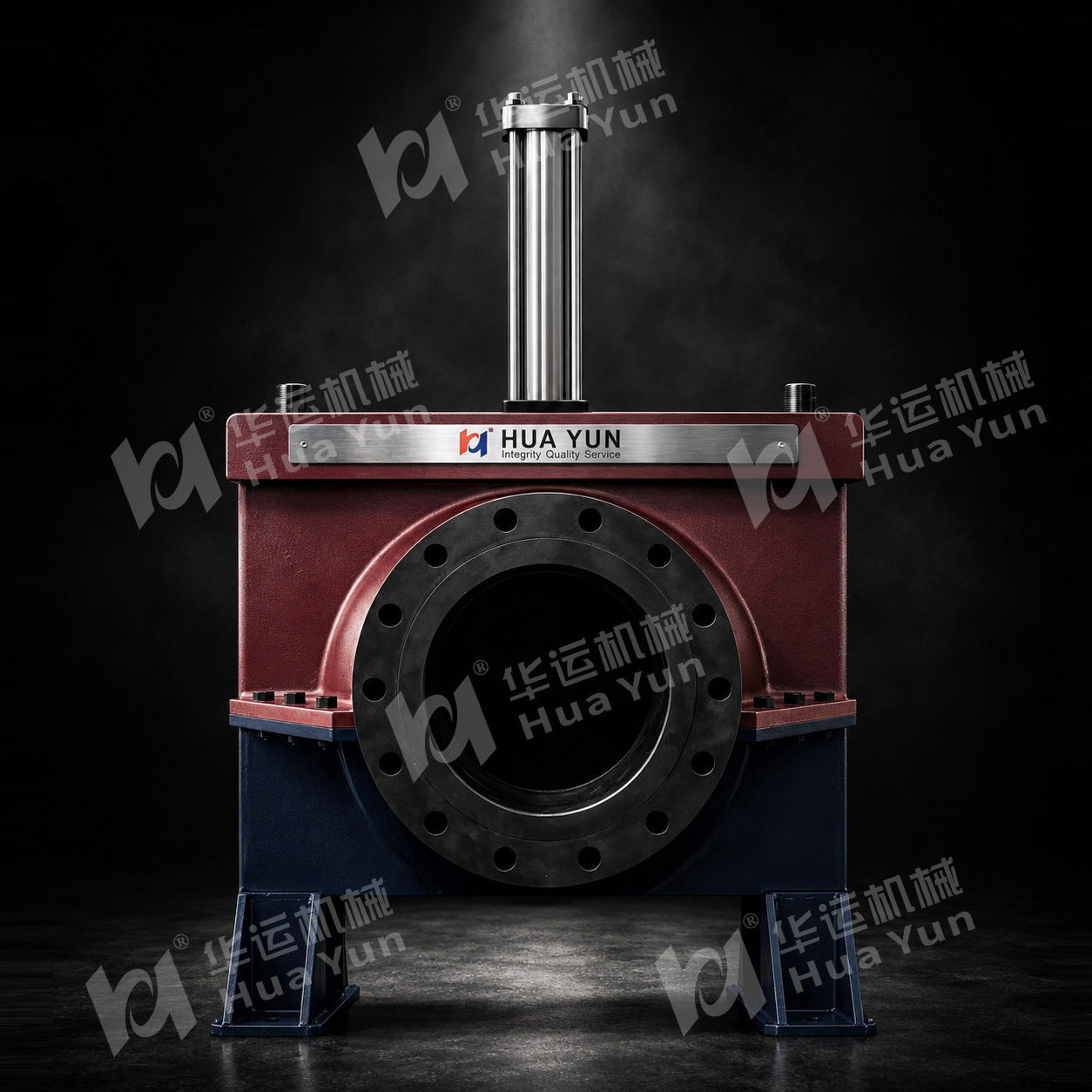
The pinch valve forms the medium flow channel relying on an elastic sleeve, and realizes shut off by squeezing the sleeve. Since the medium is mainly in contact with the sleeve, such valves are widely applied for ore pulp, sludge, powder, solid particle laden media and certain corrosive media.
Nevertheless, under negative pressure conditions such as pump inlets, vacuum conveying and suction pipelines, the pinch valve sleeve may shrink inward, resulting in reduced flow passage area, decreased flow rate, and even permanent non recoverable deformation. This phenomenon is not merely caused by “soft sleeve material”, but is a combined effect of internal external pressure difference, structural dimensions, material properties and negative pressure duration.
When the pinch valve is fully open, the internal pressure of the sleeve is determined by pipeline operating conditions, while the external pressure of the sleeve depends on valve body structure and the actual pressure inside the valve body cavity.
If the absolute pressure inside the sleeve is lower than the external pressure, the sleeve bears an inward directed pressure difference:
External pressure difference on sleeve = Absolute external pressure of sleeve − Absolute internal pressure of sleeve
For example, assume the external side of the sleeve is close to standard atmospheric pressure (approx. 0.10 MPa absolute):
· When internal sleeve absolute pressure is 0.08 MPa, the internal external pressure difference is approx. 0.02 MPa (0.2 bar);
· When internal sleeve absolute pressure is 0.02 MPa, the internal external pressure difference is approx. 0.08 MPa (0.8 bar).
Both scenarios are referred to as “negative pressure conditions”, yet the external load on the sleeve differs significantly. Therefore, to evaluate whether a pinch valve is suitable for vacuum or negative pressure pipelines, it is insufficient to simply mark “negative pressure” or only refer to vacuum gauge readings. The minimum absolute pipeline pressure and the actual pressure outside the sleeve shall be clearly defined.
1. Reduced effective flow area Under external pressure, inward shrinkage of the sleeve narrows the flow passage cross section. At constant flow rate, local flow velocity rises and system pressure loss increases accordingly.
2. Actual flow lower than design value Severe sleeve deformation may lead to substantially lower actual flow even with the valve fully open. On site faults are often misdiagnosed as insufficient pump suction capacity, pipeline blockage or incomplete valve opening.
3. Delayed sleeve reset After short term, mild negative pressure exposure, the sleeve generally recovers by its own elasticity. Heavy, prolonged negative pressure, or sleeve fatigue and ageing may slow recovery or cause permanent residual deformation.
4. Accelerated local wear For solid particle containing media, sleeve collapse alters flow passage geometry, local flow velocity and particle erosion direction. Fixed deformation zones give rise to concentrated local wear.
5. Reduced sleeve fatigue service life Repeated cycles of collapse recovery plus valve opening closing deformation impose compound cyclic loads. Even without immediate failure, long term operation accelerates rubber fatigue.
1. Valve nominal diameter With similar structural proportions and materials, larger nominal diameter corresponds to larger free deformation zones of the sleeve. Externalpressure instability deserves greater attention for large bore sleeves; small bore application experience cannot be directly copied.
2. Sleeve wall thickness and construction Wall thickness, ply count, fabric reinforced layers determine radial stiffness and anti instability performance. Simply increasing wall thickness does not infinitely improve negative pressure resistance; it also influences actuation pressure, deformation behaviour and service life.
3. Rubber compound properties Natural rubber, EPDM, nitrile rubber differ in elasticity, hardness, medium compatibility and temperature resistance. Material selection shall consider both medium compatibility and stiffness / resilience at operating temperature.
4. Medium temperature Elevated temperature degrades mechanical stiffness of rubber grades. Sleeves maintaining shape at ambient temperature may exhibit pronounced deformation under combined high temperature and sustained negative pressure conditions.
5. Negative pressure duration Distinguish transient, intermittent and continuous negative pressure. Resistance to short time vacuum impact does not guarantee suitability for long term identical negative pressure levels.
6. Rate of negative pressure fluctuation Sudden pump start up, rapid valve switching or incidental pipeline blockage generate transient pressure surges. Such transient negative pressure is often more complex to assess than steady negative pressure; minimum transient system pressure shall be identified during selection.
7. Pressure inside valve body cavity For enclosed valve bodies, sleeve exterior is not always at standard atmospheric pressure. Residual pressure, control gas or poor venting inside the cavity may further amplify the effective differential pressure across the sleeve.
To assess pinch valve suitability for negative pressure service, collect the following parameters:
· Normal pipeline operating pressure
· Minimum absolute pipeline pressure
· Transient minimum pressure and duration
· Negative pressure mode: continuous / intermittent / transient
· Pressure outside sleeve / inside valve cavity
· Medium type, concentration and corrosiveness
· Solid particle content and maximum particle size
· Normal and maximum medium temperature
· Valve nominal diameter
· Pipeline design flow and medium flow velocity
· Valve actuation frequency
· Installation position and distance from pump inlet
Minimum absolute pressure and negative pressure duration are critical. If only gauge pressure values such as −0.02 MPa are provided, confirm reference datum, measurement location and transient fluctuation components.
Standard sleeves are optimised for wear resistance, corrosion resistance, sealing performance and cyclic actuation life. Vacuum reinforced sleeves additionally feature enhanced shape retention under external pressure.
Typical technical approaches:
· Optimise sleeve wall thickness and cross section profile
· Add appropriate reinforcing layers
· Tune rubber hardness and compound formulation
· Shorten free deformation segments
· Integrate supports / limiters matching valve body geometry
· Carry out prototype verification for specific diameter and negative pressure ratings
Note: Vacuum reinforcement is not achieved by excessive wall thickness. Excessive radial stiffness raises required actuation pressure and impairs closing performance. Trade offs are required among negative pressure resistance, actuation performance and fatigue life.
For continuous negative pressure, large bore or highly fluctuating processes, theoretical calculation and material data are insufficient. Prototype testing under simulated operating conditions is recommended.
Key test observations:
· Obvious inward contraction at fully open position
· Progressive flow decay during negative pressure hold
· Stable deformation versus time deteriorating deformation
· Complete sleeve reset after negative pressure removal
· Residual deformation after repeated negative pressure cycles
· Abnormalities on sleeve surface and reinforcing layers
· Normal valve opening closing and sealing after vacuum testing
If pressure pulsation exists in service, replicate fluctuation frequency in testing instead of static single cycle hold pressure tests.
1. The nominal pressure rating of a pinch valve does not represent its vacuum resistance. Nominal pressure characterises internal positive pressure capacity; negative pressure performance describes resistance against external pressure buckling — these are distinct parameters.
2. Small bore field experience cannot be directly applied to large bore units. Variations in diameter, sleeve length and geometry change deformation modes.
3. Differentiate transient and continuous negative pressure. Recovery after short time exposure does not validate long term stable operation.
4. For deep or prolonged negative pressure applications, prioritise vacuum reinforced sleeves validated for diameter, medium and temperature.
5. For pump inlet pipelines, inspect not only valves but also strainers, pipe size, elbow count, pipeline layout and pump NPSH. Many field sleeve collapse incidents originate from excessive system suction resistance.
Pinch valve suitability for negative pressure service cannot be judged by a simple “vacuum resistant” label. Sleeve stability is governed by actual differential pressure across the sleeve, negative pressure duration, nominal diameter, sleeve construction, material performance and medium temperature.
Properly selected standard sleeves perform reliably under mild or short term negative pressure fluctuations. Systems with continuous vacuum, large nominal diameter or severe operating variations require specially reinforced structures validated by prototype tests.
This technical document is compiled by technical staff of Hefei Huayun Machinery Manufacturing Co., Ltd. (HUAYUN) based on R&D and field application experience, for industry technical exchange only and does not constitute project specific selection obligation. All pressure ranges and operating conditions shall be evaluated against specific diameter, sleeve material, medium and test results.
E-mail:huayuncompany@126.com
Factory address:No.25, Jinhai Road, Shuangfeng
Economic& Development district,Hefei, Anhui,CN
Marketing&Sales office:Floor 13th , Meidi
Yangguang mansion,Jinzhai road, Hefei City.
Copyright 2018 Hefei Huayun Machinery
Manufacturing Co., Ltd
*Part of the webpage materials and related resources on this site are from the Internet.
If there is any infringement, please inform us immediately and we will delete it within 24 hours*

 English
 Chinese